
Views: 0 Author: Site Editor Publish Time: 2026-09-15 Origin: Site
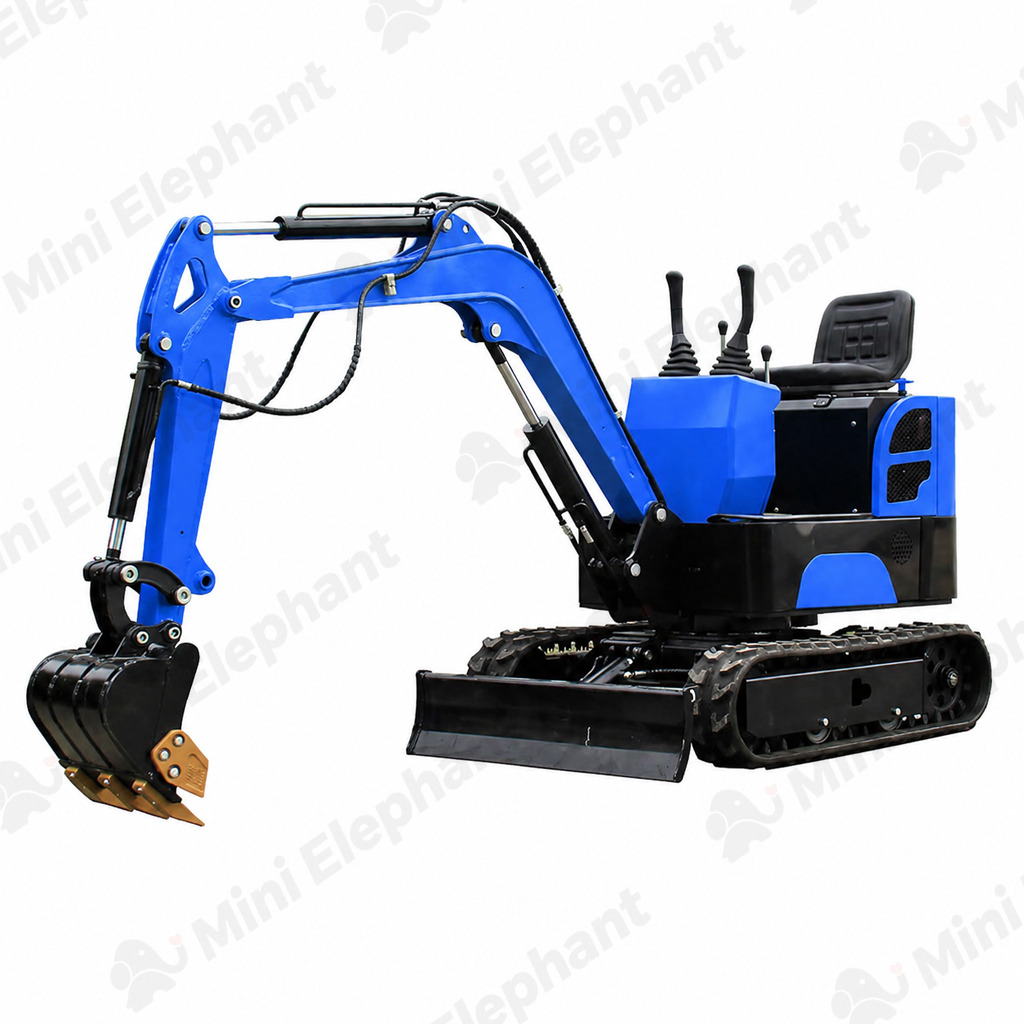
Contractors, agricultural operators, and property managers frequently hit a wall when trying to access narrow job sites. Standard heavy equipment simply cannot fit into residential backyards, indoor facilities, dense urban lots, or tight agricultural pens. You need heavy-duty earthmoving capabilities in these restricted areas without tearing up property or resorting to manual labor. This requires specialized machinery built specifically to navigate physical barriers. We will look at the engineering innovations that transform a standard digger into a highly maneuverable, application-specific Mini Excavator. Beyond just a smaller footprint, dynamic geometry, advanced hydraulics, and smart technology allow these units to execute complex tasks. You can navigate severe spatial constraints while maintaining maximum operational efficiency and breakout force.
Dimensional Flexibility: True compactness relies on dynamic engineering, such as retractable undercarriages and foldable ROPS, allowing machines to pass through standard 36-inch gates or doorways.
Tail Swing Mechanics: Zero Tail Swing (ZTS) and Reduced Tail Swing (RTS) designs are critical for preventing property damage when rotating the house in confined spaces.
Application Matching: Selecting the right machine requires balancing physical footprint with operational requirements, whether prioritizing low ground pressure for landscaping or zero emissions for indoor use.
Stability Trade-Offs: Shrinking the machine's footprint inherently alters its center of gravity; buyers must evaluate how manufacturers compensate through advanced hydraulics and counterweight designs.
To understand spatial efficiency on a job site, we must first establish the core anatomy of earthmoving equipment. The baseline components include a boom, a dipper or stick, a bucket, an operator station, and a house capable of 360-degree rotation. These standard parts form the foundation of any digging machine. In compact models, engineers modify these components extensively. They alter linkage points, reposition hydraulic cylinders, and redesign the counterweight to ensure the machine functions in tight quarters without losing structural integrity.
The equipment category generally spans weight classes from 1 to 5 metric tons, though some industry classifications extend up to 10 tons. Operating weight correlates directly with physical dimensions. The 1-ton micro class represents the extreme end of this spectrum. These ultra-lightweight machines feature minimal widths and lower heights, allowing them to navigate interior hallways or narrow side yards. As the tonnage increases, the physical footprint expands to support larger hydraulic pumps and heavier counterweights necessary for increased lifting capacities.
Evaluating a machine for confined operations requires analyzing specific baseline metrics. You cannot just guess if a machine will fit; you need hard data. Buyers must measure the maximum access width of their most restrictive job sites. Operating radius determines how far the machine can reach without repositioning the tracks. Ground bearing pressure dictates whether the tracks will destroy delicate surfaces or sink into soft mud. Transportability remains a crucial factor, as operators need to know if the unit can be towed behind a standard commercial truck.
Maximum Access Width: The absolute narrowest chokepoint on a site, usually a garden gate or interior doorway.
Operating Radius: The maximum distance the boom and stick can extend from the center pin.
Ground Bearing Pressure: Measured in PSI, this determines the machine's impact on turf, concrete, or soft soil.
Transport Weight: The combined weight of the machine, buckets, and attachments for trailer payload calculations.
There is a distinct difference between a machine that is merely small and a true compact mini excavator. Compactness is not just a reduction in scale. It represents the integration of specialized geometry. Strategic boom placement, intelligent cab design, and component folding mechanisms are engineered specifically for superior access and maneuverability. A scaled-down standard excavator would still struggle in a narrow alley due to its rigid frame and protruding tail. A purpose-built compact model dynamically adjusts its shape to fit the environment.
The mechanical definition of Zero Tail Swing (ZTS) centers on the rotating house, or upper structure. Engineers design the house to stay entirely within the width of the tracks during a full 360-degree rotation. Reduced Tail Swing (RTS) models allow a few inches of overhang, providing a middle ground between ZTS and conventional designs. Achieving this requires reshaping the heavy cast-iron counterweight to hug the rear of the machine. Internal components like the engine, hydraulic pumps, and cooling systems are mounted vertically or transversely rather than longitudinally.
The operational impact of ZTS changes how you work on site. Operators can dig flush against walls, fences, and concrete foundations without the constant risk of the rear counterweight striking obstacles. This eliminates the need for a spotter in many situations and drastically reduces property damage claims. When slewing to dump a load of spoil into a truck, the operator focuses entirely on the bucket position rather than worrying about the rear of the machine swinging into adjacent structures.
Choosing between ZTS and conventional tail swing involves evaluating job site realities. ZTS offers maximum maneuverability in tight spaces. However, conventional tail swing models often provide higher lifting capacity and superior stability for the same weight class. The extended rear counterweight provides better leverage against heavy loads. You must weigh the necessity of working in confined areas against the need for maximum lifting performance.
Tail Swing Type | Rotation Profile | Lifting Stability | Best Application |
|---|---|---|---|
Zero Tail Swing (ZTS) | House stays entirely within track width. | Lower over the side; relies heavily on front blade. | Residential backyards, indoor demolition, urban alleys. |
Reduced Tail Swing (RTS) | House overhangs tracks by 2 to 6 inches. | Moderate; better leverage than ZTS. | Suburban landscaping, light utility work. |
Conventional | Significant overhang beyond track width. | Highest stability and lifting capacity. | Open construction sites, heavy trenching. |
Hydraulic track expansion is a defining feature of the micro class. Undercarriages can hydraulically retract to navigate narrow bottlenecks. Many 1-ton micro models are capable of shrinking their track width down to 29 inches. This specific dimension allows the machine to drive straight through standard residential doors. Once the machine reaches the work area, the operator engages a hydraulic lever to push the track frames outward. This significantly increases the footprint and restores operational stability before digging begins. Operators must remember to clear packed mud from the track frames before attempting to retract them, or the hydraulic cylinders will bind.
Collapsible infrastructure complements the retractable tracks. Foldable backfill blades feature hinged steel extensions that fold inward to match the narrowest retracted track width. Tip-Over/Roll-Over Protective Structures (TOPS/ROPS) are often designed with heavy-duty pins that allow the canopy to fold down. This reduces the machine's overall height, enabling it to pass under low-hanging branches, navigate through parking garages, or enter interior demolition sites with restrictive vertical clearances.
Independent boom swing provides critical offset digging capability. Unlike standard excavators where the boom is fixed to the center of the house, a compact model's boom can swing left or right independently of the house rotation. A heavy-duty pivot point at the base of the boom allows the operator to angle the digging arm up to 90 degrees in either direction. This mechanical flexibility is essential for navigating complex site layouts where you cannot position the machine directly over the trench line.
Parallel digging is the primary advantage of the independent boom swing. This feature allows the machine to dig a trench parallel to its own tracks. When working directly alongside an existing structure, a fence line, or a roadway, you can position the tracks safely away from the edge. You then extend the boom outward to dig a perfectly straight trench flush against the barrier.
Cylinder placement also undergoes significant modification. Manufacturers frequently reposition hydraulic cylinders to protect them from damage in tight spaces. Top-mounted boom cylinders place the vulnerable hydraulic rod above the boom structure rather than below it. This prevents the cylinder from striking the edge of a trench box, a concrete wall, or loading truck sideboards during aggressive digging or lifting cycles.
Modern compact models integrate advanced hydraulic systems to deliver smooth, precise movements. Load-sensing hydraulics automatically adjust flow and pressure based on the resistance encountered by the bucket. This prevents jerky movements that could cause accidental property damage in confined areas. Grade control technology is increasingly integrated into these machines, allowing operators to achieve precise trench depths and slopes without relying on manual grade checking.
Telematics integration transforms how fleets are managed. Fleet managers use telematics on compact equipment to track utilization rates, monitor engine health, and schedule preventative maintenance. Because these machines are frequently deployed across multiple scattered residential or urban job sites, GPS tracking ensures managers always know the exact location of their assets. Telematics data also helps identify operator inefficiencies, allowing for targeted training to improve cycle times.
Turf protection is a massive priority for landscaping contractors. Operating heavy machinery on established lawns or delicate agricultural soils requires specialized configurations. A mini excavator for garden applications relies heavily on continuous rubber tracks. These tracks distribute the machine's weight evenly, resulting in exceptionally low ground-bearing pressure, often under 4 PSI. This prevents deep ruts, minimizes soil compaction, and protects hardscapes like paver driveways or concrete sidewalks from the severe scratching caused by traditional steel tracks.
Attachment versatility defines the utility of these machines in agricultural settings. Buyers must evaluate the auxiliary hydraulic flow requirements to ensure compatibility with common attachments. High-flow circuits are necessary to power augers for rapid fencing installation or tree planting. Hydraulic thumbs are critical for grasping irregular objects during brush removal or rock wall construction. Grading buckets allow for precise soil leveling, while specialized grapples are highly effective for barn mucking and handling loose agricultural materials.
Emissions and ventilation present critical hazards when operating heavy equipment indoors. A mini excavator for greenhouse environments or interior demolition must address these risks head-on. Battery-electric models have emerged as the definitive solution for enclosed spaces. They eliminate dangerous diesel exhaust fumes, removing the need for complex forced-air ventilation systems. Electric models significantly reduce noise pollution, allowing for operation in noise-sensitive areas like hospitals, schools, or densely populated residential zones without violating local ordinances.
Vertical clearance constraints dictate the physical design of indoor-specific machines. Operating under low greenhouse ceilings, navigating interior doorways, or working in basement excavation requires a highly specialized profile. Foldable ROPS are mandatory for passing through standard door frames. Compact boom geometry ensures the bucket can achieve full curl and dump cycles without striking overhead lighting, sprinkler systems, or structural support beams.
Calculating the required maximum digging depth and reach at ground level is the first step in selecting equipment for utility installations. A mini excavator for drainage must possess sufficient arm length to reach the bottom of a French drain or sewer line trench without forcing the machine dangerously close to the trench edge. Operators must evaluate the reach to ensure they can stockpile excavated dirt far enough away from the trench to prevent cave-ins.
Trenching efficiency in confined residential easements relies heavily on the offset boom and precise hydraulic controls. Maintaining straight, narrow trenches minimizes the amount of backfill material required and reduces disruption to the surrounding landscape. The ability to swing the boom independently allows the operator to dig perfectly parallel to property lines or existing utility corridors, ensuring compliance with strict municipal zoning regulations.
Shrinking the physical footprint of earthmoving equipment inherently introduces operational trade-offs. The most prominent compromise exists between physical size and breakout force. Smaller machines utilize smaller hydraulic pumps and lighter operating weights. This directly limits their digging power and lifting capacity. While a micro model excels at fitting through a garden gate, it will struggle to rip through heavily compacted clay or lift large concrete retaining blocks compared to a heavier 3-ton unit. You have to match the machine's breakout force to the soil conditions you typically encounter.
Stability versus maneuverability represents another critical balance. A narrow track width combined with a Zero Tail Swing design challenges the machine's center of gravity. Because ZTS models lack a heavy rear counterweight extending beyond the tracks, they are more susceptible to tipping when lifting heavy loads over the side of the tracks. Operators must adjust their lifting angles. You always want to prioritize lifts over the front blade, using the lowered blade as a stabilizer to maintain maximum leverage.
The cost of complexity must be evaluated against long-term returns. Advanced compact features like retractable tracks, electric powertrains, and integrated grade control carry a premium initial purchase price. Buyers must weigh this upfront capital expenditure against the ROI of accessing highly restricted, high-margin jobs. If a contractor frequently turns down lucrative backyard hardscaping projects due to access issues, the premium paid for a retractable-track micro excavator is quickly recovered through new project acquisition.
Operator training is the primary mitigation strategy against job site accidents. Operating a machine with retracted tracks significantly reduces its stability footprint. There is a severe risk of tip-overs if an operator attempts to dig or lift heavy loads before expanding the undercarriage. Safety protocols must strictly mandate that tracks are fully expanded and the backfill blade is lowered to the ground to anchor the machine before any earthmoving operations commence. Operators must also be trained on how to clean the track frames daily to prevent hydraulic binding.
Maintenance accessibility presents a logistical challenge. Packing complex hydraulic manifolds, cooling packages, and diesel engines into a compact frame makes routine maintenance more difficult. Mechanics often struggle to reach oil filters, grease zerks, or hydraulic hoses buried deep within the housing. Buyers should evaluate service access panels during the purchasing process. Features like tilt-up cabs, swing-out rear doors, and grouped service checkpoints drastically reduce downtime and labor costs associated with preventative maintenance.
Transport logistics require careful planning. While compact machines are lighter than standard equipment, they still require appropriate hauling infrastructure. Buyers must verify trailer selection, ensuring the trailer's payload capacity exceeds the machine's operating weight plus any heavy attachments. Proper tie-down procedures are non-negotiable for safety and DOT compliance.
Drive the machine onto the trailer and lower the boom, stick, and bucket flat against the deck.
Lower the front backfill blade completely to the trailer deck.
Engage the hydraulic lockout lever and shut down the engine.
Attach graded transport chains to the designated factory anchor points on the machine frame, avoiding hydraulic cylinders or track links.
Use load binders to tension the chains, ensuring the machine cannot shift forward, backward, or laterally during transit.
Measure the narrowest access points on your upcoming job sites, including gate widths, alleyways, and overhead clearances.
Match your required digging depth and lifting capacity against the specifications of available compact models to ensure adequate breakout force.
Schedule a dealer demonstration to physically test the hydraulic smoothness and verify the track retraction mechanics in a real-world scenario.
Evaluate the local availability and hydraulic flow compatibility of specialized attachments like augers, thumbs, and grapples.
Verify the payload capacity of your current transport trailers and towing vehicles to ensure they can safely and legally haul the selected machine weight.
A: Standard excavators feature rigid frames and extended counterweights built for open spaces and maximum lifting. Compact models utilize specialized geometry, including Zero Tail Swing, retractable undercarriages, and independent boom swing capabilities. These anatomical modifications allow compact machines to navigate tight access points and operate flush against structures without causing property damage.
A: Micro models engineered for extreme confined spaces can shrink significantly. By utilizing hydraulic retractable undercarriages and folding the extensions on the backfill blade, these 1-ton machines typically reduce their width to between 27 and 29 inches. This allows them to drive directly through standard residential doorways or narrow garden gates.
A: Zero Tail Swing (ZTS) is an engineering design where the upper rotating house stays entirely within the footprint of the tracks during a full 360-degree turn. This prevents the rear counterweight from striking adjacent walls, fences, or obstacles, allowing the operator to work safely in highly restricted areas without a spotter.
A: Yes, specific micro-excavator weight classes are built for this exact purpose. They require hydraulic retractable tracks to narrow their stance and foldable ROPS (Roll-Over Protective Structures) to lower their overall height. This combination enables safe passage through standard 36-inch gates and interior doorways.
A: For standard residential trenching and French drain installations, a 3-ton to 4-ton weight class is generally recommended. These models provide the necessary reach and a maximum dig depth of 8 to 10 feet, ensuring efficient trenching while maintaining a footprint small enough for residential easements.
A: Yes. Battery-electric models produce zero exhaust emissions, completely eliminating the ventilation hazards associated with diesel engines in enclosed spaces. They also generate significantly lower noise levels, making them the optimal and safest choice for greenhouses, indoor demolition, and noise-sensitive environments.


