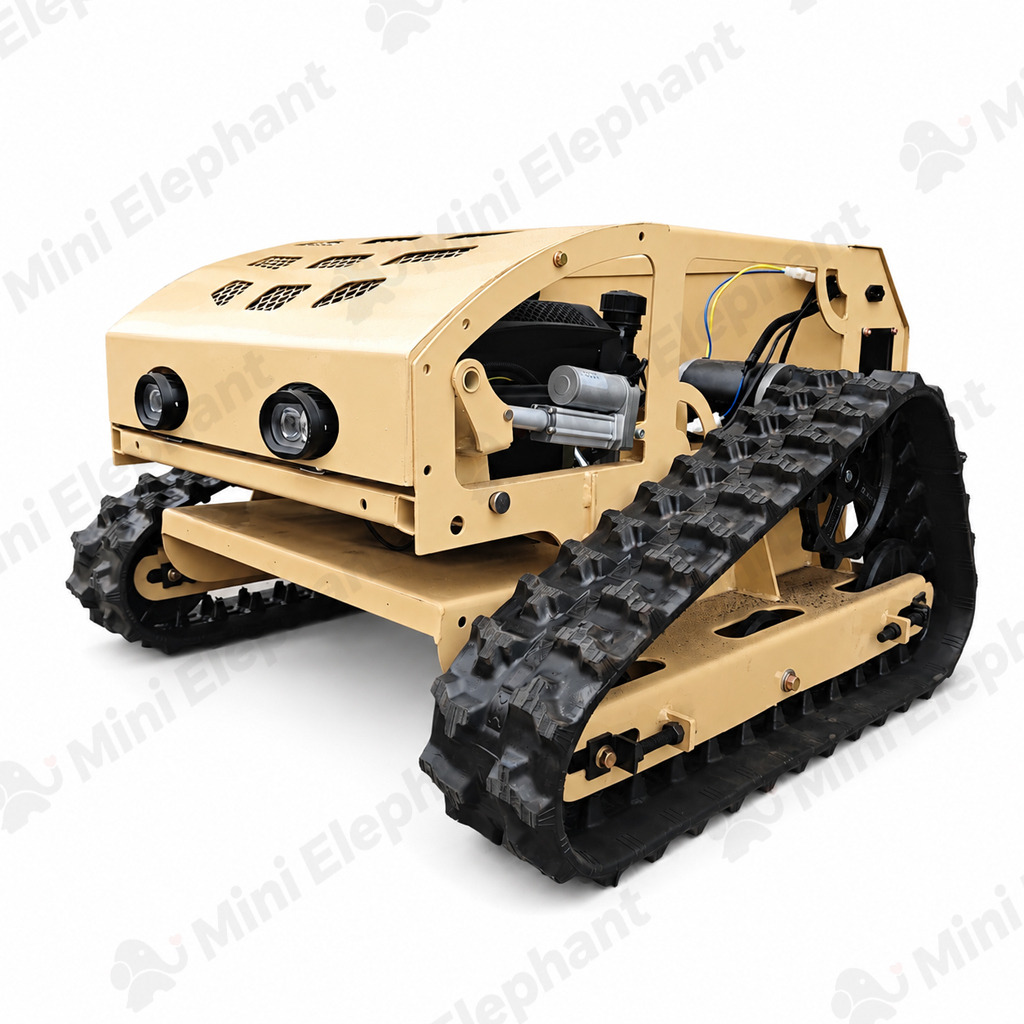
Views: 0 Author: Site Editor Publish Time: 2026-09-22 Origin: Site

Commercial landscaping and slope maintenance present severe safety hazards. This reality drives the adoption of remote-operated equipment. Removing operators from the danger zone paradoxically improves their overall vantage point of the site. Procurement teams and facility managers frequently misinterpret manufacturer specifications regarding transmission range. Selecting a unit based solely on maximum radio frequency (RF) distance ignores critical operational constraints. Advertised ranges often reach up to 1,000 feet. However, this metric overlooks visual line of sight, terrain interference, machine maneuverability, and fail-safe reliability.
To make a technically sound purchasing decision, buyers must evaluate the true operational reach of a remote control lawn mower. You must analyze the intersection of RF capabilities, power plant efficiency, chassis dimensions, terrain dynamics, and operator safety protocols. Understanding these variables ensures safe, efficient, and continuous operation across challenging topographies.
Theoretical vs. Practical Range: While commercial transmitters can reach 300 to 1,000 feet (90–300 meters), practical and safe operation is strictly limited by visual line of sight, typically restricting effective range to 15–100 feet (5–30 meters).
Power Source Dictates Capability: A gasoline powered remote control lawn mower provides the sustained torque and runtime necessary for heavy-duty, long-range slope clearing, whereas electric alternatives face distinct operational limitations.
Comprehensive Remote Functionality: True operational reach is also defined by what the operator can control at a distance; commercial-grade units allow full manipulation of PTO, deck height, and tracking via intuitive handheld remotes.
Terrain and Dimensional Interference: Topography, dense vegetation, and physical obstacles degrade RF signals, while the machine's physical dimensions dictate how effectively it can be steered along edges and fences from afar.
Application Specificity: The required reach and machine type—such as choosing a remote control flail mower over a standard rotary deck—depend entirely on the density of the vegetation and the steepness of the grade.
Commercial mowers utilize specific radio frequency bands to communicate between the handheld transmitter and the machine's receiver. Manufacturers build these systems primarily on either 2.4 GHz or 900 MHz frequencies. Each band offers distinct operational characteristics in the field. Procurement teams must match the frequency type to the intended work environment to avoid signal dropouts.
The 2.4 GHz band provides high data transfer rates. This allows for rapid control inputs and zero-latency steering. However, high-frequency waves struggle to penetrate dense physical objects. The 900 MHz band offers superior object penetration. It pushes signals through thick brush, heavy timber, and minor terrain crests much more effectively. Lower frequencies sacrifice a fraction of data speed for robust signal stability in cluttered, overgrown environments.
Frequency Band | Data Transfer Rate | Obstacle Penetration | Ideal Operating Environment |
|---|---|---|---|
2.4 GHz | Very High (Zero Latency) | Low to Moderate | Open fields, solar farms, clear line of sight |
900 MHz | Moderate (Slight Latency) | High | Dense brush, wooded areas, uneven terrain |
Modern commercial units also utilize bidirectional telemetry. Unidirectional systems only send commands to the mower. Bidirectional systems send critical machine diagnostics back to the operator's remote screen. The display shows engine temperature, oil pressure, fuel levels, track speed, and chassis tilt angle. This data loop becomes vital when operating at the edge of your visual range, allowing the operator to monitor the machine's health without walking up to it.
Radio frequency specifications represent a theoretical maximum. Human eyesight represents the practical reality. RF range serves as a secondary metric to visual line of sight (VLOS). You cannot safely operate heavy machinery if you cannot see exactly what the tracks and cutting deck are doing.
Operators face a strict spatial awareness threshold. Beyond 100 feet, human depth perception degrades rapidly. You lose the ability to accurately judge terrain drop-offs. Hidden obstacles like rocks, stumps, wire fencing, or debris blend into the vegetation. Determining the exact orientation of the tracks becomes nearly impossible from a distance. When this happens, steering inputs become reactive rather than proactive, leading to erratic machine movements and potential track derailment.
This introduces the Visibility Paradox. Traditional ride-on mowers place the operator directly over the cutting deck. This seated position obscures the ground immediately in front of the machine. Stepping off the equipment and using a remote actually provides enhanced visibility. You gain a wider field of view. You can inspect the slope angle and spot hidden hazards before the mower reaches them. This advantage only exists if the operator remains within a 15 to 100-foot sweet spot.
Safety compliance dictates strict operational guidelines. Industry standards require the machine to remain within clear, unobstructed view at all times. Operating beyond visual limits invites property damage, equipment rollover, and severe liability risks. Operators must constantly adjust their physical position on the site to maintain this visual connection.
Internal combustion engines dominate the heavy-duty slope mowing sector. A Gasoline Powered Remote Control Lawn Mower provides the continuous runtime required for massive commercial sites. Landscaping crews cannot afford to halt operations for battery charging when clearing miles of highway embankments or massive retention ponds.
Gasoline engines deliver sustained torque. Thick brush, wet fescue, and two-inch saplings demand immense rotational force to clear effectively. When a mower encounters dense vegetation at a distance, the engine must power through without bogging down. If the engine stalls, the operator must walk into the hazard zone, manually clear the deck, and restart the machine. Sustained torque ensures the machine maintains its operational reach without requiring human intervention.
Operating on 40- to 50-degree slopes requires a specific physical architecture. The machine needs an exceptionally low center of gravity. Heavy components like the engine block, hydraulic pumps, and fuel tanks sit deep within the steel frame. This prevents rollovers and maintains track traction without the operator needing to physically stabilize the equipment. Furthermore, commercial gas engines feature pressurized oil lubrication systems. Standard splash-lubricated engines will starve for oil and seize when operated on steep angles. Pressurized systems ensure continuous oil flow to critical engine components regardless of the chassis tilt.
Electric power plants offer a different set of operational parameters. A lithium battery remote mower excels in specific environments but faces distinct limitations in heavy brush. You must weigh these mechanical trade-offs against your specific site requirements.
Electric units produce significantly lower noise levels and generate zero localized emissions. This makes them ideal for hospital grounds, university campuses, and dense residential areas. Crews can operate them early in the morning without violating municipal noise ordinances. The electric track motors also provide instant torque, allowing for very precise, low-speed maneuvering around delicate landscaping features.
However, electric mowers face severe runtime constraints during heavy-duty clearing. Steep inclines force electric track motors to draw massive amounts of current to fight gravity. Pushing a rotary deck through thick, wet grass further accelerates battery drain. A battery pack that lasts four hours on flat, dry turf might deplete in 90 minutes on a 40-degree slope covered in heavy brush. Voltage sag under heavy load can also reduce the cutting blade speed, leading to poor cut quality.
Charging logistics present another field hurdle. Remote locations rarely offer access to 220V power outlets. Crews must transport heavy gas generators or multiple expensive backup battery packs to sustain all-day operations. This logistical friction often limits the practical reach of electric units in rural, forestry, or highway applications.
Matching the cutting deck to the environment dictates your success in the field. Clearing dense brush at a distance requires specific mechanical action. A remote control flail mower utilizes a horizontal steel drum fitted with heavy forged blades (flails). This design pulverizes vegetation rather than simply cutting it, turning saplings and thick weeds into fine mulch.
Standard rotary blades spin horizontally. They work well for grass but often bind, bend, or shatter when striking hidden rocks or thick saplings. Flail blades pivot on their mounting shackles. If a flail strikes a rock, it bounces back into the drum housing, preventing catastrophic damage to the driveline and spindle. This durability is crucial when operating at a distance, as the operator cannot always see ground-level hazards hidden in the overgrowth.
Heavy vegetation also impacts signal reliability. Dense, wet brush canopies absorb radio frequencies. Operating a mower deep inside a thicket degrades the RF signal much faster than operating on open turf. Flail mowers designed for this environment utilize industrial-grade receivers and elevated antennas to penetrate the canopy and maintain a strong connection with the transmitter.
Terrain dictates signal strength more than any other variable. Direct line of sight provides the strongest possible RF connection. Cresting a hill instantly breaks this line of sight. When the mower rolls over the peak and down the other side, the earth itself blocks the radio waves, causing an immediate loss of machine control.
Operating in ditches or deep retention ponds presents similar challenges. The operator stands on the bank while the machine descends into the bowl. The steep walls of the ditch can cause radio shadowing. The signal fails to bend around the sharp angles of the earth, leading to sudden communication drops. Operators must constantly walk the perimeter of the ditch to maintain a direct visual and radio link to the receiver.
Understanding the physics of signal propagation helps operators maintain control. Radio waves travel in a straight line but require an elliptical area of clearance known as the Fresnel zone. If the ground encroaches too far into this zone, the signal attenuates rapidly. Operators must position themselves at elevated vantage points to keep the Fresnel zone clear of the terrain. Standing on the bed of a work truck or at the highest point of the slope significantly improves signal reliability.
Physical objects disrupt 2.4 GHz and 900 MHz signals in different ways. Dense tree canopies act like a sponge for high-frequency waves. The moisture inside the leaves absorbs the RF energy, drastically reducing the effective range. Operating in heavily wooded areas requires the operator to stay much closer to the machine, often within 30 to 50 feet.
Metal structures cause signal reflection. Chain-link fences, steel guardrails, and solar panel arrays bounce the radio waves in unpredictable directions. This creates multipath interference. The receiver gets confused by multiple overlapping signals arriving at slightly different times. High-quality commercial systems use frequency-hopping spread spectrum (FHSS) technology to constantly switch channels and avoid this interference. FHSS systems scan for clear frequencies hundreds of times per second, ensuring the control link remains stable even in environments heavy with metal structures.
Weather conditions also play a marginal role in signal degradation. Heavy rain or extreme humidity increases the amount of water in the air. Water absorbs microwave frequencies. While light rain won't stop a commercial mower, torrential downpours can reduce the maximum transmission range by 10 to 20 percent. Operators must account for this degradation during severe weather and reduce their working distance accordingly.
Calculating your necessary reach starts with profiling your typical job sites. Residential properties rarely require more than 100 feet of range. The operator can easily walk the perimeter and maintain a clear view of the machine. Lightweight units handle these tasks efficiently without requiring industrial-grade transmitters.
Commercial contracts demand entirely different specifications. Highway embankments stretch for miles. Retention ponds feature steep, muddy banks. Solar farms require navigating around thousands of delicate glass panels and steel stanchions. In these environments, a gasoline remote control lawn mower serves as the baseline standard for continuous, long-range operation.
Municipal contracts often require all-day operation across expansive, hazardous sites. The operator needs the ability to stand safely on the shoulder of a highway while the mower clears a 45-degree slope 50 feet below. The machine must possess the fuel capacity, track traction, and signal strength to complete the job without forcing the operator to climb down the embankment to refuel or clear jams.
Maximum range means nothing if the controls are clumsy. The handheld interface serves as the operator's only connection to the machine. Transmitter ergonomics dictate how long an operator can work without experiencing hand fatigue. Commercial remotes feature balanced weight distribution, padded neck straps, and intuitive proportional joystick layouts.
True operational reach requires full-function control. The operator must manage every aspect of the machine from up to 1,000 feet away. This includes independent track steering for zero-turn maneuvers. It includes engaging and disengaging the power take-off (PTO) to control the blades. It also requires dynamic deck height adjustments to clear unexpected obstacles without stopping the machine.
If an operator has to walk up to the machine to manually adjust the cutting height with a lever, the remote control aspect loses its value. Complete telemetry and control at the fingertips define a successful commercial implementation. Advanced remotes also feature potentiometer dials to scale the maximum track speed, allowing for precise movements when edging near retaining walls.
Evaluating safety mechanisms is mandatory. You must know exactly what happens when the machine exceeds its maximum range or loses the RF signal. Equipment operating on steep slopes poses a massive kinetic threat if control is lost. A 500-pound machine rolling down a hill can cause severe property damage or fatal injuries.
Commercial units employ strict fail-safe protocols. The system must feature a zero-latency emergency stop button on the remote. Pressing this button must instantly kill the engine and halt the tracks. There can be no delay in signal processing during an emergency. The circuitry relies on normally closed relays; if power is interrupted, the system defaults to a dead state.
Automatic engine kill switches provide a secondary layer of protection. If the receiver loses communication with the transmitter for more than a fraction of a second, the machine must shut itself down. Electromagnetic braking systems engage instantly upon signal drop. These brakes lock the track drive sprockets in place, preventing the mower from rolling down the hill.
The primary implementation risk involves overestimating the machine's capabilities. New operators often test the absolute limits of the RF range simply because the manufacturer claims it can reach 1,000 feet. This leads to dangerous situations where the operator loses visual context of the terrain, resulting in stuck machines or damaged cutting decks.
Mitigating this risk requires strict spatial awareness training. Operators must learn to walk parallel to the machine, maintaining a safe distance of 15 to 50 feet. This distance protects them from thrown debris while providing optimal visibility of the slope and upcoming obstacles. Operators should never stand directly downhill from the mower.
Training programs must emphasize visual checks over screen reliance. While bidirectional telemetry provides great data, the operator's eyes remain the primary safety sensor. Crews should practice navigating complex terrain, identifying radio shadow zones, and executing emergency stop procedures before deploying the equipment on live commercial sites.
Site Walkthrough: Physically walk the terrain to identify hidden rocks, wire, and severe drop-offs before starting the engine.
Establish Boundaries: Determine the maximum visual range based on the specific site's lighting and vegetation density.
Test Fail-Safes: Turn off the remote transmitter while the machine is idling to verify the automatic engine kill and electromagnetic brakes engage properly.
Positioning: Always maintain an elevated or parallel position relative to the mower to ensure a clear Fresnel zone for the RF signal.
Audit Site Topography: Map out your most challenging slopes and identify potential radio shadow zones before deploying equipment to prevent sudden signal loss.
Prioritize Visual Line of Sight: Train all operators to maintain a strict 15 to 100-foot working distance to ensure optimal spatial awareness and hazard detection.
Verify Fail-Safe Protocols: Test the emergency stop and automatic braking systems daily to guarantee the machine locks down instantly upon signal loss.
Match Power to Vegetation: Select gasoline-powered flail units for dense brush and steep inclines to prevent engine stalling and maintain continuous remote operation.
A: Commercial transmitters can theoretically reach up to 1,000 feet (300 meters) in open, unobstructed areas. However, safe operational range is limited by visual line of sight, typically restricting practical use to 15–100 feet.
A: Radio frequency requires a clear path. When a mower crests a hill or enters a ditch, the earth blocks the direct line of sight. This physical barrier absorbs the RF waves, causing a sudden loss of communication known as radio shadowing.
A: Yes, for heavy-duty commercial applications. Gasoline engines provide the sustained torque needed to clear dense brush without stalling. They also offer continuous runtime via quick refueling, whereas batteries drain rapidly on steep slopes.
A: Commercial units feature electromagnetic braking systems tied directly to the receiver. If the RF signal drops or the operator presses the emergency stop, the system cuts engine power and instantly locks the tracks to prevent rolling.
A: Yes. High-frequency signals like 2.4 GHz can be marginally absorbed by heavy moisture in the air. Torrential rain or extreme humidity can reduce the maximum effective transmission range, requiring the operator to stand closer.
A: The visibility paradox refers to the fact that stepping off a ride-on mower actually improves your view. Operating via remote from 30 feet away allows you to see terrain drop-offs and hidden hazards that a seated operator would miss.